




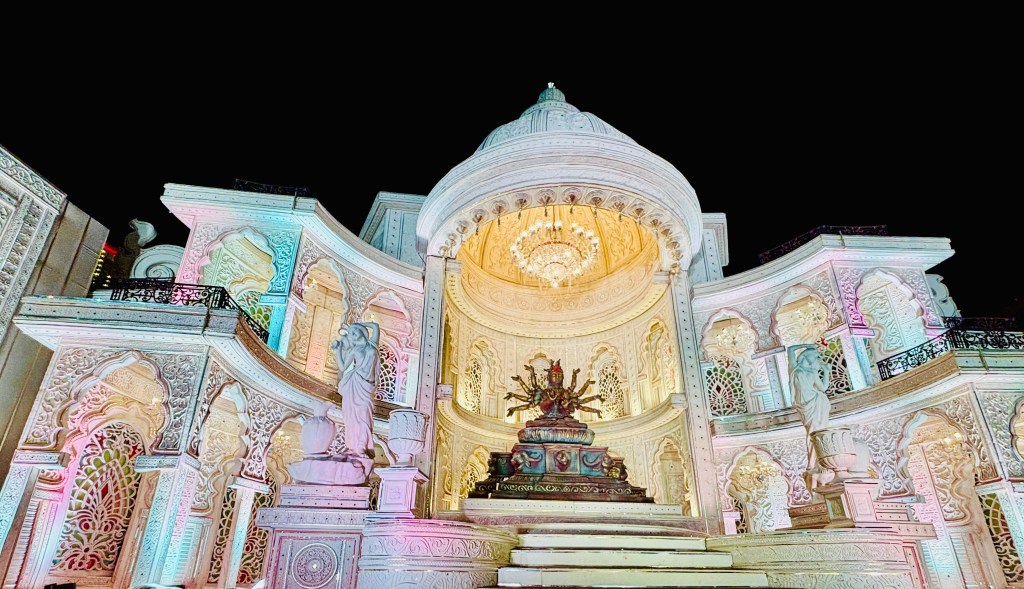


The biggest festival from my hometown, Chandannagar (a former French colony on the suburbs of Calcutta), is “Jagaddhatri Puja” (Puja means worship). It’s a cultural event for the worship of one of the many avatars of Shakti, the Hindu Goddess of power and energy. It happens sometime in November and is the largest revenue generator for the town. I won’t get into the history of how it started for there are conflicting legends, but the earliest record of the festival dates back to mid-17th century.
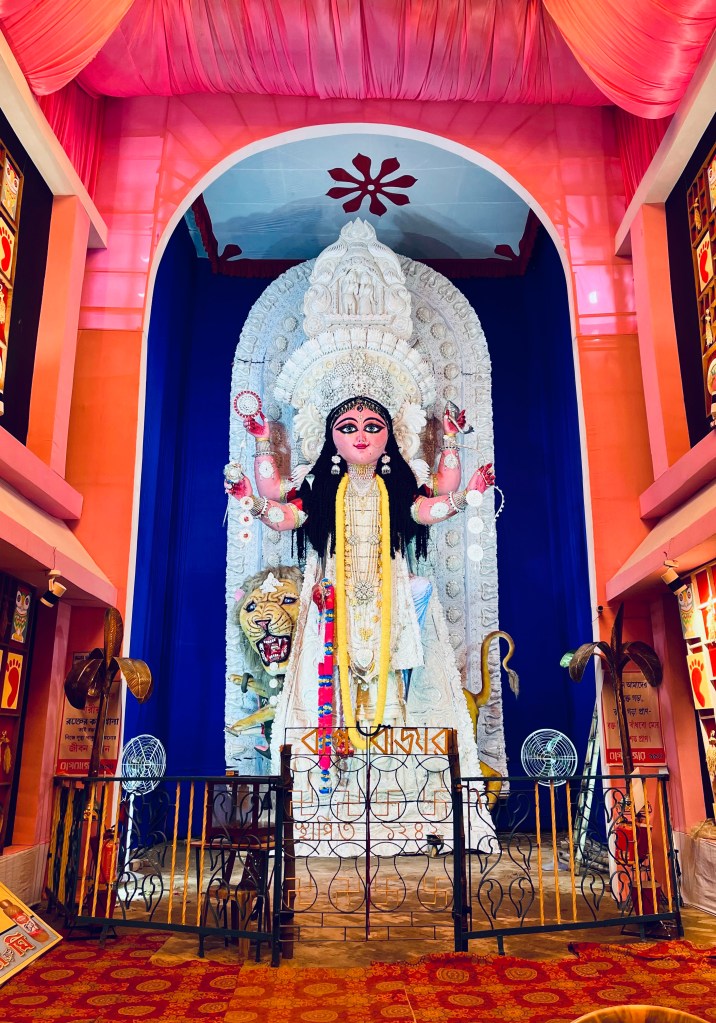
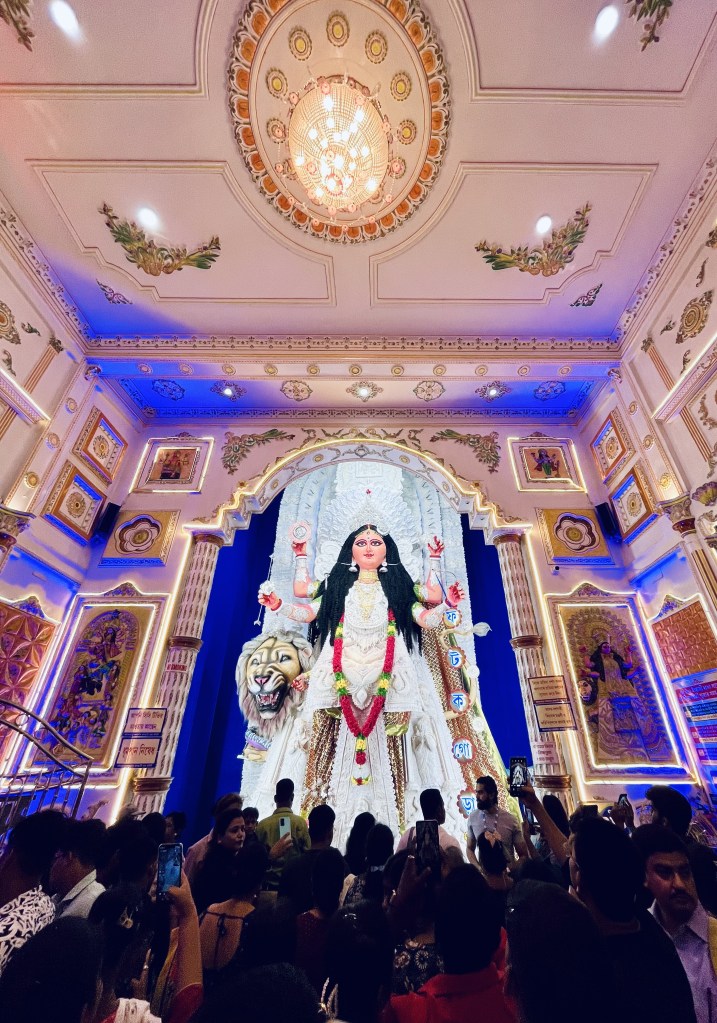
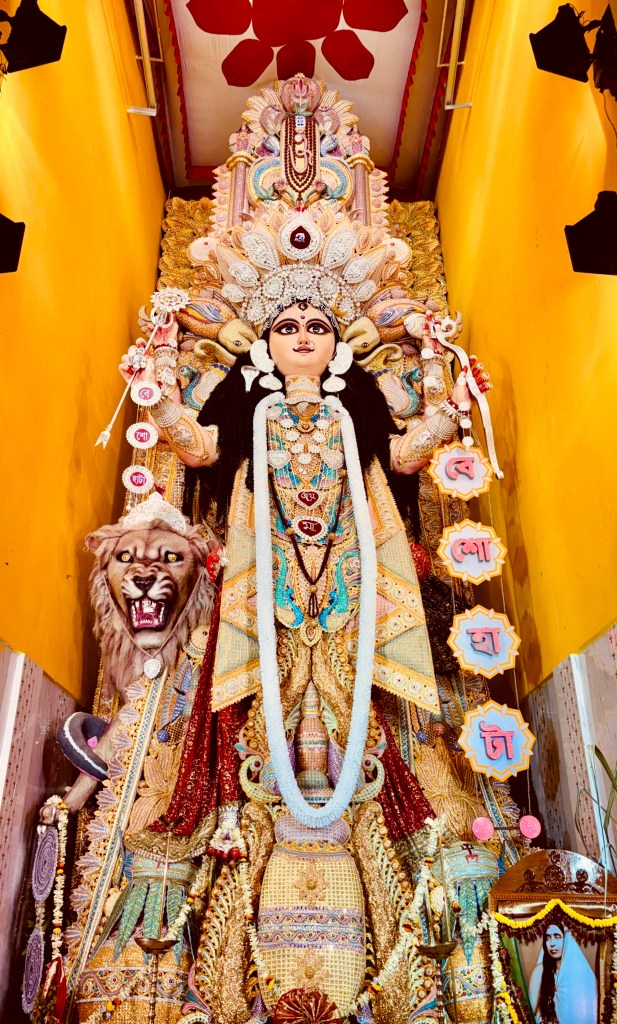
Basis the need of the world, Shakti manifests in many forms, from the destroyer “Kali” to the protector and nurturer “Jagaddhatri.” Hence, Goddess Jagaddhatri is envisioned as massive in stature for she carries the world and is supported by a lion and an elephant. Today, ~200 community-organized Jagaddhatri Pujas happen across Chandannagar. These are financed by contributions from the public and businesses that utilize the six-day festival for trade and marketing.
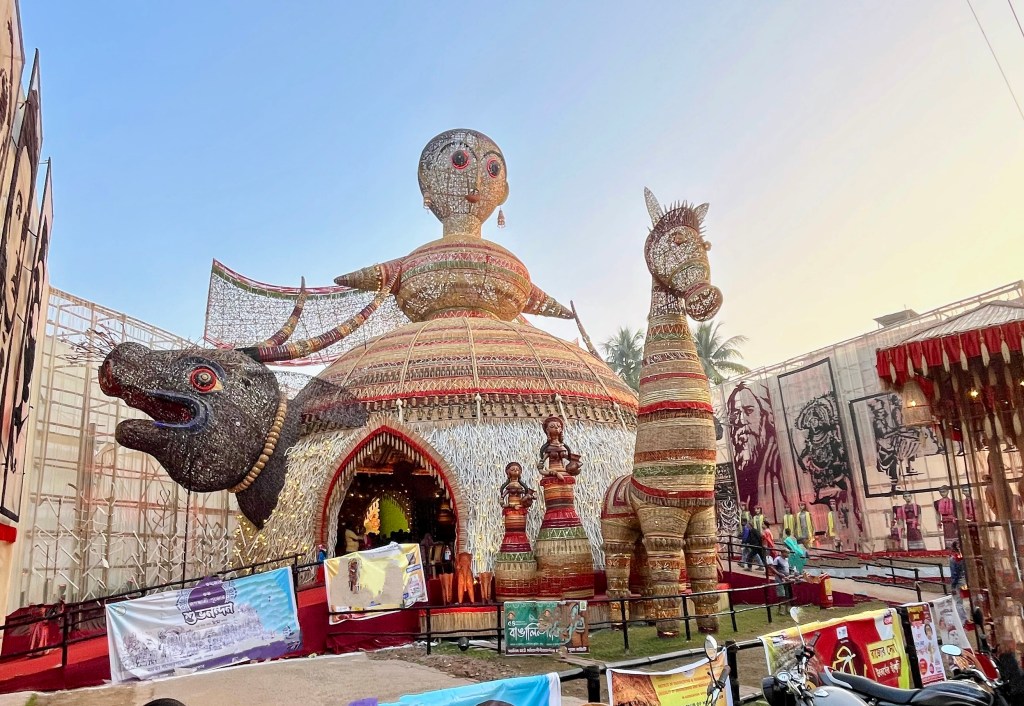
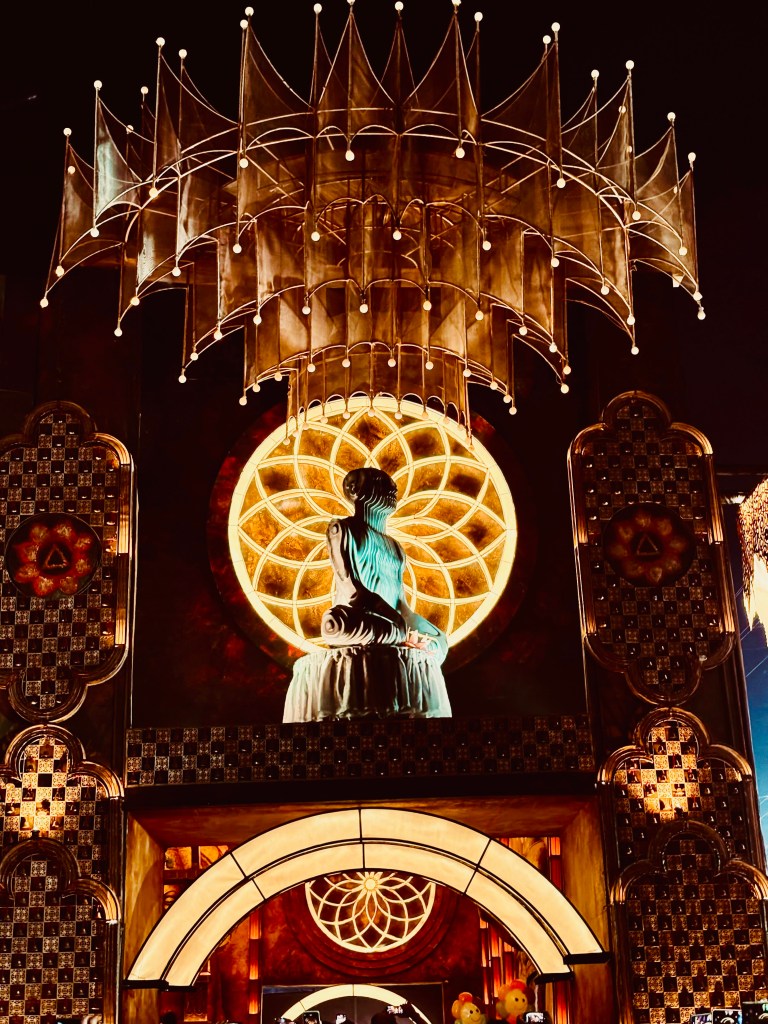
For the festival, the idols are built with earth at the spot of worship for they tend to be 25 to 30 feet in height. Meanwhile, around the idol, a temporary temple of worship or “Pandal” is built for the festival. The Pandal construction can take weeks for it combines several distinct types of artisanship. Depending on the artistic vision of organizers, these Pandals can be built with materials such as ice cream sticks, glass bangles, metal scraps, earthen vessels, among others.
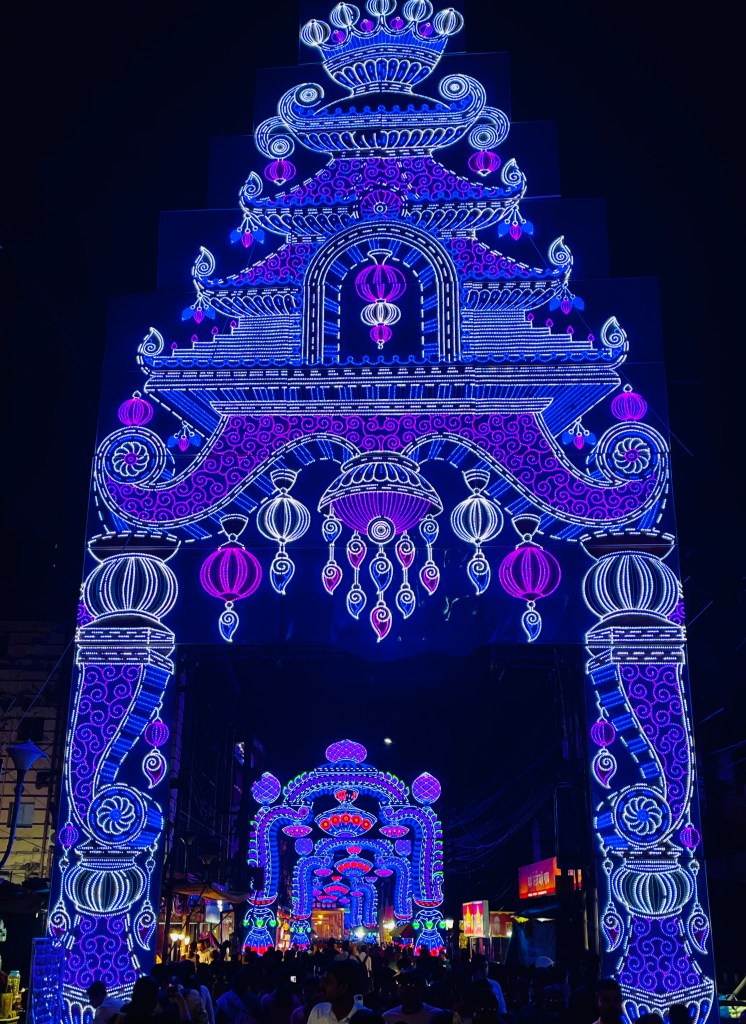
Often, these Pandals relay social messaging to do with global warming, diversity, right to education, among others. A key feature of this festival is the use of animated and motorized lights. Chandannagar has a renowned industry of lighting decorations with markets from Europe to East Asia. This festival is an opportunity to display their latest innovations. The population of this town of ~250,000 jumps 20X during the festival as people travel in to experience Chandannagar in all its glory.
At the end of the festival, the idols are loaded on trucks and taken out in a grand parade with decorated tableaux and lighting displays. Following a night-long procession, for which spectators camp out on the parade route, the idols are finally submerged in the nearby river from the where the earth was collected to build the idols. With that the planning begins for next year’s Jagaddhatri festival.

 arguments & agreements